Monday, December 9, 2019

30 Days of Night


If you like this graphic novel, you probably won’t like anything I have to say. I have a love/hate relationship with graphic novels because I grew up reading them, but I have little patience for them now. Often, to me, they seem to be a cop out of writing with talking heads and a couple overhead shots detailing the scene so it doesn’t have to be shown in each picture. Other times they are loads of aerial shots with a few spurts of dialogue. A 150-page graphic novel takes me thirty minutes to get through because the art is rushed, copy pasted for effect, too plain, or like I said earlier…it’s just talking heads.

In reference to “30 Days of Night,” I think the artist and the writer surely had a plan or pretended to have had one. The cover up for it would be the excerpt at the beginning stating the art is rushed for a reason and backgrounds lack any significant detail or structure. I see this as an excuse for sloppiness.

A graphic novel should be visually stunning as well as well written. The writing didn’t grab my interest, so the art needed to compensate but the sloppy style he used for the comic doesn’t work for me long term. In comparison to the illustrated Clive Barker stories, these felt like storyboard art, or the rough draft of a project never completed. They look nice sometimes as individual pictures, but beyond one artsy picture here or there it is just—bleh. They’re repetitious, flat, inconsistent, and conceptually plain. The disclosure statement had me ready for detailed eyes in each shot, and instead it was a messy scribble with a dot to show how wide-eyed and scared characters were. It didn’t do what it was trying to. I don’t think I can say it any clearer.

Obviously, I’m the odd one out because I’ve heard of this graphic novel over and over, and it’s probably made them tons of money and such. That’s fine. But story-wise I find it predictable and unoriginal. Maybe this is because I’m reading it after I’ve seen or read things inspired by it. Never saw the movie. Maybe I’d like it better. I just didn’t buy into the ending and how the cop was able to change all the vampire’s minds about the main guy in an instant. I also thought him burning up in the sun at the end showed selfishness rather than something sadly romantic.

I'm going to cut it short since I don't have anything good to say about the story. I don't really want to ramble on too long about it. I'm sure a lot more people enjoy it rather than dislike it. 

I dunno, maybe I was tired so it clouded my judgement. ¯\_(ツ)_/¯

Thursday, December 5, 2019

The Relic


Well, I thoroughly enjoyed reading “The Relic.” I found it entertaining and fast paced, even when the characters started using scientific language I didn’t totally understand. I’ve never seen the movie, but I was told it was pretty good and that the book was better. Famous words of just about every book turned movie.
This book was a good step away from what I’m used to reading for classes, and because it was entertaining and mysterious, I really allowed myself to just sit back and enjoy it rather than being critical of it. The writing is simple, and the descriptions made it easy to visualize what things looked like (except Mbwun.) I’ve only been to one natural history museum, and it was the Field Museum in Chicago, so I had some background as to what a museum like the one in the book would look like. The National Museum of Natural History in New York is, I’m assuming, the actual museum this was based on, but I watched the trailer for the movie and the one for the movie takes place in the Field Museum in Chicago. I’ll admit, the biggest thing that happened to me while reading the book was that I really want to go to more Natural History museums. Just…not because a museum beast is killing everyone.

I didn’t dislike any of the main cast/PoVs. I think this was another reason the story moved so quick. Often times, when books switch PoVs like this one did, I end up skipping the parts which take place around characters I dislike. I would say, of all the characters, Margo felt the plainest, but I still had no reason to dislike her. She is a doer and that’s what I cared about most. I get worried about female characters sometimes being outshone by their male counterparts, and I was very happy that she got to be a part of Mbwun’s defeat. The other female character felt like she did a 180 from how she was throughout the beginning. Rickman went from being the overconfident, snooty big mouth to the scared little girl. I feel like, as the audience, we didn’t see enough of her and her change to have had her presented like she was in the ending after they get trapped in the exhibit. I get the psychology behind panic and such, but it just didn’t feel natural.

This doesn’t just go for Rickman, who is just one example of one of the characters doing an unpredictable switch, many of the characters felt this way. Switchback, probably my favorite character because of how arrogant and annoying he is, felt pretty forced in the ending. I don’t think how he acted was at all realistic in the opposite sense of how Rickman’s switch seemed overdone with panic. However! I liked all the stuff he did, from eating falling food from the spread to his lack of fear of dying and obsession with making big money. He was very one dimensional, but it didn’t bother me. He worked well as the comedic relief.

The only major criticism I have about the book as a whole is the reveal of the defeat of the monster. The entire second half of the book leads up to it and the cut off to another character before the final blow didn’t work for me. I think it would have been better to describe, in detail, how it died in real time rather than as a story the characters relay. The way Pendergast and Margo came waltzing in made me think, at first, that they had pledged their allegiance to Mbwun in order to survive…which would have been a really fun twist, I think. I see that Pendergast has his own series so it wouldn’t work in that sense.

The best simile I can come up for how this book read for me is it was like watching someone bake a cake for me, frost it, decorate it, cut the slice, put it on the plate, and then tell me how it tasted. BUT THEN someone comes along, someone who altered the recipe somewhere along the line, and tells you it wasn’t a cake, it was a cookie that looked like a cake.

And one last comment I’ve mentioned already in the Roachmeos and Julie-8 legs discord is I hate the word “gingerly” and it is used too many times in the story!


Friday, November 29, 2019

Blubber


This is my first viewing of The Blob and I was surprised I liked it quite a bit. I will admit, the title is pretty boring, like The Thing, so I was turned off to it. I was expecting some silly slime ball movie more funny than scary. In the end, I think there were more good qualities than bad from my perspective.

I’ll start with my criticisms. I stated the first one, which is the title. Pretty uninteresting. It was released a year before I was born, so I really had no reason to want to watch it when I got a bit older. I was all about aesthetics on covers and fantasy titles. The only other really big complaint I have about the film is the predictability. I mean, it could just be because I (we) study stories and the art of storytelling, but the first few moments of the story told me right away that... 
Related image
And it is the answer! 

It’ll be cold so your bike is useless, but not really because it’s small and concealed and right next to the crash site, and hey that guy has this snow machine behind him that he likes to keep beers in! What a strange thing to have in a ski tourist town. I guess, if I was a standard movie goer, all these set ups are fun gems in a rewatch. For me, it just felt like I always knew what was going to happen.

And Drew Barrymore had it right in opting to kill her character right away in Scream. I knew who the protagonists were just by their fame, but this is also 2019 me saying this about a movie from ’88, and I haven’t seen any other Blob movies. At first, I thought Brian was Matt Dillon but turns out it’s his more baby-faced brother, Kevin. I’m just happy the jocks died early on, even if Paul wasn’t a bad guy. It set the stakes and showed that not just the perverts or baddies are going to get swallowed. Nomnom.

The last criticism I have is the reactions of the characters to events was unrealistic. I think everything was shrugged off too easily. Why would the cops think that the town’s punk massacred the people in the hospital like that? Wouldn’t they wonder why there was a juicy arm sitting on the floor and a gelatinous truncated old homeless man? Why didn’t the blob eat Meg when she passed out? I also didn’t see a point where Meg went from being the scared girl to the tough girl counterpart to Brian. I feel like seeing someone melting inside Flubber would put an average person into total shock, especially if she pulled his arm off. Fran’s reaction felt the most real to me, and I was surprised she and the sheriff died. That was pleasantly unexpected, and I may have laughed.
Image result for flubber

To counter my own criticisms, I think it was fun that I knew what was going to happen a lot of the time. For example, I think it is obvious for everyone who watches it that the crystals the Reverend puts in the jar would have a call back at the very end. It lets viewers watch the movie and yell at the characters for doing obviously stupid things. The predictable archetypal characters worked well so we knew who to cheer for and be sad for when they met their end. The satisfying deaths also help with the horror enthusiast’s desire to see the monster work its magic when the main characters get to survive/monster gets defeated.

Overall, I thought the film was entertaining and fun. I liked the little jokes thrown around, the constant danger, and the multiple threat angles (the monster itself, the cops, the reverend, the biological warfare team, even the jocks.) Plus, everything was set to be an obstacle: The nurse, the condom scene/father of Meg, the underage movie goers, the doctor, the homeless man, both jocks. And how could you not love a horror movie that doesn’t kill the animals? I think it was well plotted and wrapped up nicely.

Friday, November 22, 2019

Cult of Lovecraft


This is not the first time I’ve read these stories by Lovecraft, but I will say I definitely got more out of them the second time reading them. I want to love Lovecraft, but his writing style is just not something which holds my attention. First person is also not one of my preferences, but I do think it works very well in horror and suspense. I adore the stories he creates, the monsters he makes, but I don’t like the process of obtaining the information. I just have to fight my way through the story to get the stuff I like out of it. I spent years reading Victorian and American Lit, so I got this!

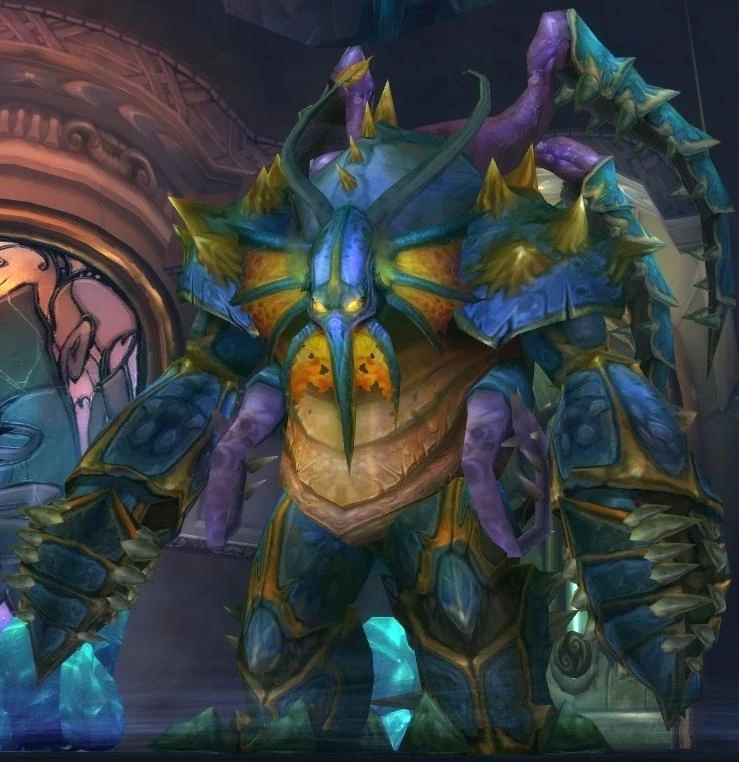
That being said, amidst the monstrous blocks of text, there are some descriptions and phrases which catch my attention. These moments in his writing I only saw in, of the three stories, “The Call of Cthulhu” and “The Outsider.” They appear generally at the end of a section when the result or conclusion of a part of the story is about to be revealed. In “The Outsider,” it was when the switch in my brain flipped so I knew the narrator was the monster. In “The Call of Cthulhu” it was pretty much any moment where the cultists were being described, and I think this is partly because I knew so much about Cthulhu before I read it the first time. It is such an influential piece; I pretty much was gifted visuals from my video game which were then described to me through the original text. I didn’t realize how closely they followed the designs in the writing. That’s confusing, so I’ll just post some samples. My favorite part would have to be the warped room with everything out of place.
Old Gods 2.jpg

Related image

Image result for cthulhu south


“Pickman’s Model” was something I had forgotten I’d read previously until it concluded. I don’t get any suspense from this story, I don’t particularly enjoy reading it, and I find the ending unsatisfying as well as predictable. The descriptions of paintings are weak at creating a sense of suspense, probably because I don’t find pictures frightening even if they’re realistic, and it was kind of odd to hear him nonchalantly talking about how he let out a scream. I don’t have much else to say about it. A part of me thinks I may have disliked this one because I read it last, and I was tired of reading giant globs of text.

Overall, I can appreciate Lovecraft’s writing, his excellent descriptions, and his creations. I find it hard not to be awed by what he has done for science fiction and fantasy and the amount of influence “The Call of Cthulhu” alone has on literature and entertainment.  The writing style from his era is certainly not one of my favorites, but he is one of the writers from that time which I would prefer to read. It reminds me a lot of Tolkien, because many people adore Middle Earth and the stories he created, but they dislike the process of obtainment. (I did really enjoy reading “The Hobbit” though.) Tolkien is another critical must read, I think, for anyone writing fantasy.

Friday, November 15, 2019

Gogira


Godzilla (2014) was pleasantly entertaining to me. I’ve never cared much for the original Godzilla films, but I did like the Godzilla (1998) that everyone hates so much. I just love dragon monster things and she was very dragon-y. I didn’t really care that it didn’t follow any of the Godzilla rules or whatever. I didn’t have an interest in watching the 2014 version mainly because I just don’t crave some Godzilla, but after seeing it I would recommend it to people who enjoy some fun monster action.

I was disappointed, but already made aware, that there was not much shown of Godzilla in the movie. I enjoy the movie for the monsters, not the story or anything else going on outside of Godzilla killing radiation eating bugs. I hear the second one is much better for monster fights.
Image result for muto cartoon

The biggest problem I had with the film was how ineffective the story they were telling was because the audience knew Godzilla was the answer. Godzilla will come. Godzilla will win. It kind of has the Superman feel to it. If we watched the film and Godzilla failed and the world became a big giant muto breeding ground, no one would watch it…probably. I personally thought the muto were visually more appealing and better developed in terms of how they work than Godzilla. From my understanding based only on the information I got out of the film, Godzilla is just an earth guardian that helps keep the earth’s balance. He doesn’t look like he could be amphibious to me, and I don’t understand how he exists or where he came from (I get the whole radiation thing they montage, but I don’t get how Godzilla is still alive.) This is where I start to nitpick instead of enjoy the movie because the muto felt more well defined than him. I guess I wanted a bit more than whatever Dr. Ishiro Serizawa was going on about.

As soon as the muto hatches and Ford’s father die, I feel the story dies with it and from there on the only thing interesting is the monsters. It could just be that I cared more about the father than I did the son, and I didn’t really feel the need to connect to Ford or his family. Once the father died, I was more interested in Dr. Ishiro Serizawa. Unfortunately, all he did the entire movie was rave about Godzilla and wanting to see Godzilla. Godzilla will fix it. And that quote from the trailer I remember seeing over and over, “Let them fight.”

On the other side of things, I love how every effort made by the humans just makes the problem worse. Their involvement basically makes the audience shout at them like hecklers in a scary movie shouting at the person going down the dark alley. It was very obvious they were trying to get the point across that human interference with nature just makes things worse. I might actually say it is social commentary on humans trying to fix problems that should just be left alone.

I know it seems like I just ranted about how I disliked it, but I really did enjoy it and I think I’d watch it again given some time. I would also like to see the new one, especially if it has more monsters and less annoying people.


Friday, November 8, 2019

Spirit alien zombie puppets disguised as snow!


Snow has been my favorite read so far. I thoroughly enjoyed the characters, and although I’m not a huge fan of more than a couple head hops, I think the way it was executed in this book progressed the story in a way that wouldn’t have been possible if it were done with only one or two perspectives.

I remember my “I bet so-and-so will die first” moment occurring when the head hop swapped to Fred instead of Nan, and Malfi emphasized Nan as a weaker character. I really thought she would be the first one to go, so when Fred died first out of the “hero” cast I was surprised. I also liked him much better than his wife. Overall, I think all the characters were well flushed out. I liked Todd and Kate’s relationship throughout the story, and I know some of the group felt it was cringy, but I think it seemed pretty standard for an initial attraction. They were like the male and female versions of the same character. They were both clever doers with a morbid sense of humor. I say morbid because they’re cracking jokes to lighten up the mood when essentially the world is falling apart around them. I think I related to these two the most out of the lot.

The snow didn’t really do anything for me creativity-wise. I think the monster was too random, too unknown and underdeveloped. We talked about revealing too much about a monster, but I think one of the big questions I needed to have an answer to from this story, at least in my own version of the reading, was why? This question just grew bigger with the ending and Todd shrugging it off as “to feed, to take over” wasn’t good enough.

I do, however, really like the ending. I like that it isn’t over, but we’re left with the impression that, at least for the moment, Todd and Kate made it. I think the actions and survival part of the story was far more important than the actual monster. It could have been another zombie or vampire story and I don’t think it would have to change much. Actually, I think this was just a zombie story where the zombies are reanimated by some snow spirit instead of a bacteria or parasite in the brain.

Another aspect of the storytelling that stood out to me right away was the way the answer to the threat and the danger of the threat was interwoven. Every time the heroes learned something new, the monster became more complex. It was like in a video game when you unlock a cool new sword but the level of the monsters, you’re fighting increase.

Even if I didn’t think the monster was the greatest, I still don’t think it does anything to harm the story. I really enjoyed reading it. I will say that if I wrote this story, my ending would have involved Molly being possessed by one of the snow spirits and have the fetus rip out of her body because the spirit couldn’t figure out what body to puppeteer. But that’s just me.

Friday, November 1, 2019

The Thinnng


I'm going to start off with how much I love the spider head.
 
And it reminds me a lot Krum from "Ah! Real Monsters."

I have never seen this film and it sure was a treat so close to Halloween. I thoroughly enjoyed it: the setting, the monster, the cast.
I will admit I felt a few scenes dragged on a bit long, and the choice of sound effects in the long scenes made it feel a bit longer. For example, I don’t think the howling wind in the beginning with the helicopter chasing down the malamute was engaging or interesting, and I was starting to get confused as to how these guys were failing to shoot it and it was off-putting. I suppose it is an example of how I was not buying into the “danger” of the situation. In hindsight, I really like how it all plays together and how the beginning shows how the whole story panned out for the Nords. It also shows how the Nords were also just trying to stop the Thing from spreading. I still think the beginning could have been presented better with the same effect.  I also could not figure out why the dog was over at the Norwegian camp in the first place, or if it was one of their dogs that just decided to run in the direction of the next closest camp. The American camp protects the dog like it is one of their own. I think this ended up being one of the plot holes for me, and it was one that the story could do without because they end up looking for and bringing back the frozen Thing to the camp. I don’t think the dogs needed to be in the story at all, really. But I will say that the dog part of the monster was my favorite. It also reminded me of the Xenomorph baby when it pops out of the chest.
We discussed what it takes to depreciate the scare factor of a monster, and I think the Thing is an excellent example of a monster that just stays a scary monster. Its M.O. is to adapt and change, so really we’ve never seen the Thing’s final form. It learns and hides. The potential for the monster is limitless and I think that is the biggest scare factor for this monster. I just want to know what it would look like after it has devoured and adapted to every living organism on the planet. Probably a really badass monster. End of the world type of scary.
Another thing that I really liked about this story was that the ending is rather open. It isn’t a happy ending for anyone, including the Thing, and the audience is left wondering whether the Thing has really been defeated. I like to think that it wasn’t, and that the Thing is just diddling around waiting for the next living thing to come by. It’ll happen eventually. We all know it! I also like that the last two standing hate each other, don’t trust one another, and we’re not really sure if they’re both Thing-less.

 In the end, I really enjoyed this movie. I felt it was fun to watch, the monster makeup and design was excellent, and the scare was left to the monster and the feeling of “what’s going to happen next.” I think this is a movie that is best left alone, although I know there is a remake or sequel of some sort, mainly because one of the reasons I feel it is effective is because of the unhappy/open ending. It is a good example of how we know there has to be more to the story, but the ending still acts as closure. Even if the Thing is dead there, it might be somewhere else out there.

Friday, October 25, 2019

An American Werewolf in London


I have recently been told that American Werewolf in London is actually the sequel to American Werewolf, and the same person who told me this said I would have had better expectations going into the movie if I had seen the first one.
Overall, I felt the film was silly. It was never suspenseful or scary, it was just like a big joke. I liked it for this reason. If I had been watching it expecting to be scared or think the monster was cool, I think I would have been disappointed. It was a very basic werewolf, though I thought the transformation was well done/filmed, especially for not using CGI. The mask really made the werewolf in the movie above all things, especially because they use it for a lot of the violent scenes. Its striking eyes really stick with you.
I absolutely love his undead friend Jack. I honestly wish he was in the story more, or that Alex might have been able to spot him or smell his aroma, or maybe even see something that he might have moved. I liked his relationship with David better than Alex and David’s relationship, and it’s because I bought into their friendship at the beginning better than the forced love affair between Alex and David throughout the movie. If this had been played on more than Alex and David’s relationship, I think I might have felt a little more sympathy for David. Instead, I was just kind of rooting for him to die because Jack’s fate was more on the line. We know David is going to turn into a werewolf, we know how he can be killed, we know that maybe someone who loves him can stop him. Part of me was also more interested in knowing if Jack was a hallucination or an actual ghost/ghoul. My guess would be that he would have to be a ghost if he was real because there would be some sort of evidence of him and the other victims. One of my favorite parts is the movie theater, particularly the very casual “tea talk” the ghosts have about how David should kill himself.
My criticisms come to the movie from the expectations I had of seeing something that was supposed to be at least somewhat suspenseful or scary. I really think it missed it’s mark here. I felt the story was too predictable and upfront, giving away every hint with a big neon glowing sign. I don’t know if this would be because the acting or the directing felt stiff, or if the screenplay was just meh, but I could not get over already knowing what was going to happen next. I think the only part of the movie that surprised me was that when they killed him at the end, they did not show someone else limping off with some werewolf-caused wound to continue the cycle.
I think this story with the same cast should have been slowed down to a short tv series to show the progression of time. It was an aspect of the film that I struggled to keep track of.
I can’t say I’d sit down to watch it again, but it was at least fun to sit through once.

Friday, October 18, 2019

Alien and Jonesy

I love the "Alien" franchise, so I've seen this movie prior to reviewing it for the course. I fell in love with the monster design, later named a Xenomorph, and whenever I'm asked who wins, Alien or Predator, it is always Alien. Alien is best.

Since I’ve seen, and used to own, “Alien,” when I went to rent it, I decided to watch the director’s cut since I have not seen it before. Either version is excellently filmed, and while I’m not a film major or expert, I can tell the angles and shots are just right for the tension of the scene. I think this really is one of the better horror movies out there. It has the suspense, the fear of the unknown, body horror, and only a couple jump scares. It uses limited vision to force the audience to look where they don’t want to, and the great suspense comes when expectations of seeing the alien aren’t met. It creates distrust in the camera and unpredictability, which is the best way to put the audience in the ship with the crew. Even better, the first death after Kane pops out his baby, is Brett, and we don’t see any evidence of where Brett went or if he is dead. As the story progresses the deaths are 1 up’d. Dallas looks to be killed in the vents but it goes unseen, then we get to see Ash get destroyed, marking the first brutality other than the baby alien exploding through Kane’s chest. After that it’s both Parker and Lambert getting parts popped and cut on screen. All the while, Jonesy has been the one closest to the alien the entire movie.

I think the thing that I love most about the Xenomorph is the design. It just feels like it would be a superior being with an exterior exoskeleton, motion activated baby making face huggers also armed with a plated exoskeleton, the ability to adapt DNA, acidic blood (which I’ve been informed is the reason why their teeth are so nice and bright), and a mouth in their mouth. What else could a monster ask for? How about a long bony scorpion tail and spikes! I really just love everything about them. But now I’m cheating and talking about other aspects of the franchise.


The way the alien is introduced is another element of the film I enjoy. We see what happens before any of it goes down with the giant and it’s exploded rib cage. I cant remember my reaction or what I thought the first time I saw this movie, but I would be curious to see if people who knew nothing about “Alien” and how they’re created/how they work, would be able to guess how it was all going to go down. I think that it is such a famous work, even those who’ve not seen the movie already know something about the face huggers, or have at least seen the costumes that come out every Halloween. I also like how it starts off as something innocent inside an egg and turned into a creature that drops its sex organs down your throat and suffocates you while doing so. So in the first twenty minutes or so of the movie, the viewer thinks the monster is the little hand with a tail. But surprise! It just made a little Disney Princess inside of Kane, and the rest of the movie ensues.  

Image result for xenomorph queen disney princess

Thursday, October 10, 2019

World War ZzZz and Night of the Living Dead


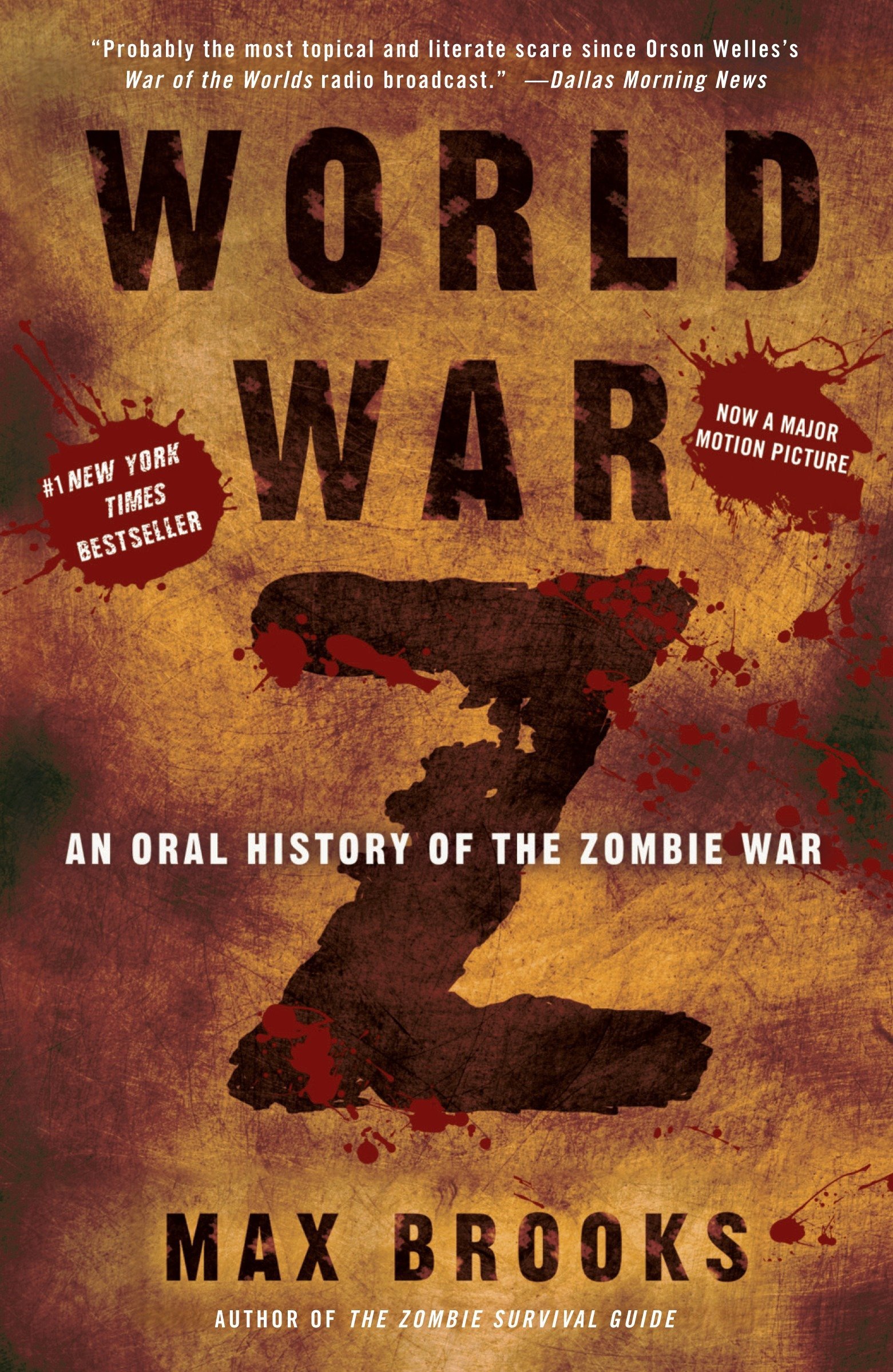
Image result for world war z book

I'll start with the negative to end with the positive. I strongly dislike reading stories that lack a central character, and that is exactly what Max Brooks' has done in World War Z. I had extreme disinterest in it, and it felt like reading a dry textbook about something I didn't care about.

I began reading the book several weeks ago and tried to do chunks of it to push through. I found myself looking for excuses to not read or sitting down to read and falling asleep after one chapter. I tried playing quick games in between readings to give myself a brain break but the whole thing just drug on forever. While I could hold my attention through a single chapter/character, I couldn't link them all together.

That is, unfortunately, my overall opinion of the book. I had high expectations because my friends loved it and I’d heard that it was excellent, but in the end, it just isn’t something I’m interested in reading in a novel format.

What I did like about this book was the idea behind the approach. It was done better, I think, than King’s Cycle of the Werewolf, which I felt was similar in execution. I think Cycle’s transition from segments of a story to a main character just made the first half of the novella weak in comparison to the last half. World War Z is significantly longer and wider in scale. I like how it is showing interviews from all over the world to make the epidemic feel that much bigger. It reminds me of the extra content that comes with the Game of Thrones dvds with all of the major figures retelling the execution of the Mad King and the war. It shows how everyone experienced the same event in a different way.

Brooks also did an great job of changing the voice to fit the interviewee. I don’t think that all of them were completely distinct from one another, but there were several that stood out. When I look at the chapters as individual short stories, there are two that really stuck with me. “Bridgetown, Barbados, West Indies Federation” and “Topeka, Kansas, USA.”
Bridgetown is the hired mercenary protecting the rich. What I liked most about this was I felt this was the mostly likely scenario to happen. I loved the character’s voice and the mannerisms expressed in what he says. I like how honest he is about what happened and how he reacted. His human connection shows through and he isn’t just a badass willing to kill frightened people even though he’s being commanded to. Just, overall, I like this guy best.
Topeka is the girl that is in an asylum. I like this one for the character’s mental state, what happens in her tale, and how she tells it. I think this chapter can hold its own more than any of the others. They’re all pretty well rounded, but this one just holds every element that a story needs. It creates the scenario, puts little bits that call back by the end with her mother nearly killing her. I just felt like I was in this character’s head more than any of the others I’d read. I honestly felt like my chubby grandma Bobbie was hugging me with her big soft wing arms. But she died a few years ago so then she’d probably be a zombie if she was really hugging me.
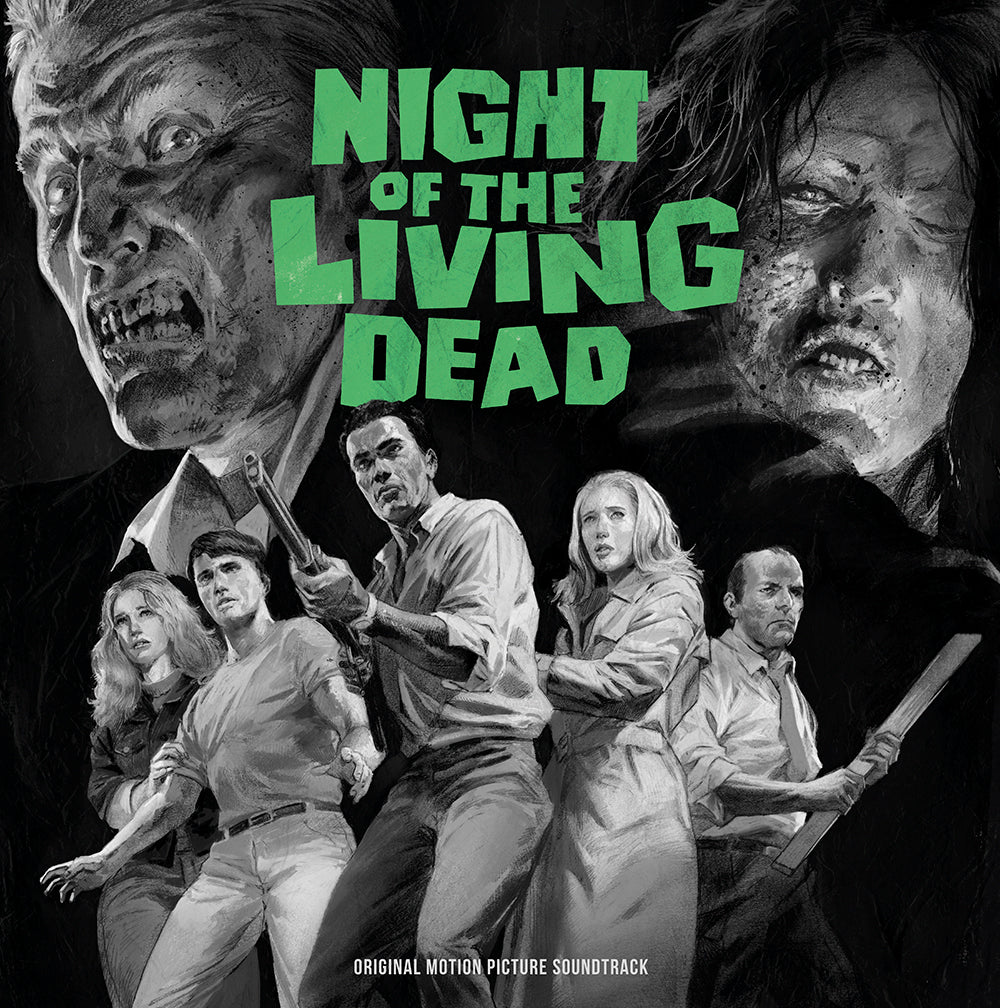

Image result for night of the living dead


So here I work my second half of the post with something positive. I’ve never seen “Night of the Living Dead” and it was incredibly fun to watch. I watched the black and white version (in HD!) because I figured the original would look better than the colorized. At this point in the world, I don’t think this could be scary for anyone with how desensitized we are. It certainly wasn’t for me, but I thought it was amazingly funny and wonderfully put together considering its age. Even though I’ve not seen this until now, I was aware of the fame of the beginning without even knowing where it came from. “They’re coming to get you, Barbara!” I knew when it was said that I’d heard it before. I think I even said it with Johnny the first time he said it.

I had a feeling that this movie was going to be one of those “firsts” movies. When I was discussing it with my coworker, who was a film major, he confirmed it by telling me how Duane Jones as Ben was the first, or one of the first(?), movies to ever cast someone that wasn’t white as the hero. I’m also thinking Romero is the foundation of zombies.

I loved Ben and I was rooting for him throughout the film, so when he died, although I kinda saw it coming, I was pretty disappointed. His character was steadfast, resourceful, and headstrong, and inevitably lead to all of their deaths (at least I think he did.) Obviously he shot Cooper which led to his death, but he also put his torch down beside the truck which I immediately yelled at him for in my bedroom movie theater. I also thought Tom was stupid for flailing the hose with gas everywhere then thinking it was a good idea to aim it at the truck.

I feel the characters that really made the story were Ben and Cooper. The women felt overly flat, which was disappointing, and Tom was too quick to change his mind on everything making him feel cheap. Ben and Cooper are nearly the same with their critical difference being their choice of place to camp out. This obviously creates the majority of the tension in the film aside from the encroaching horde of “living dead.” I felt like I could get on board with both Ben and Cooper, so I think Tom is who I feel most closely related to. I suppose, all in all, each character was pretty flat, but they all served a purpose in creating constant tension leading to the death of everyone. I guess if they were all willing to change, or learn from their mistakes, they would have survived.


Friday, October 4, 2019

The Yattering n' Jack


If all of Barker's writing is like The Yattering and Rawhead I think he might be one of my new favorite writers. I don't know exactly how to pinpoint what it is that I like best about his writing from what I have read so far, but my best guess is it is because the story is always moving forward. I think The Yattering and Jack is an excellent example of the 7-point story arch pattern, except if the Yattering is presented as the protagonist, he never actually finds a way to defeat Jack. There are also more than just three attempts to break Jack, but I would say the main three points can be lumped into his wife’s suicide plus all of the little annoyances in the beginning, the three cat deaths, and then the attack on the daughters at Christmas leading inevitably to the Yattering becoming a servant of Jack. When breaking it down, it becomes a little clearer on how the Yattering was succeeding at breaking Jack, but because of Jack’s awareness of the Yattering, he can defeat his own emotional reactions. It keeps the suspense going because they are both winning and losing the battles at the same time. All the crazy things going on in the beginning have some sort of detrimental outcome which, in reality, is a win for the Yattering. However, Jack’s main goal being to survive and not be taken by the Yattering means every time he doesn’t fall into corruption he has won. I think this back and forth within the scene, and the sympathy the reader can feel for the Yattering, keep the story moving forward at all times.

Like Rawhead, I had a copy of the graphic novel, so the way the story and art was presented felt like a U shaped roller-coaster track where the cars have seats facing forward and backward, and it goes in favor of one then back to the other, over and over up until the end. The denouement even holds this with the Yattering reminding Jack that he’ll be rejected by Heaven for having dealings with him.

I can’t speak for the short story example of the story, but the graphic novel version does an excellent job at presenting two potential villains to the story right from the beginning. Jack is presented in a hanging photo with a wicked looking grin, and the Yattering is also grinning in the same manner. So really, the only thing making the Yattering the antagonist or the monster is the fact that he is what he is. As the story progresses, Jack is shown as just a kind, easy-going, older man with family values. Toward the end, in the Yattering’s final attempt, Jack’s expressions change to be similar to what they were presented as in the hanging photo at the beginning. I know, before having read any of it, I thought the artist was making out Jack to be a creeper of some sort, just by the way his face was presented in comparison to all the other pictures.
Overall, I really enjoyed this story and I am glad to have read it, as well as viewed it, in its graphic novel format. I’m looking forward to reading more work by Barker.


Friday, September 27, 2019

Cycle of the Swearwolf

I will admit, I do not enjoy reading King's writing, (but I do like the film and tv adaptations) so right away I had a distaste for The Cycle of the Werewolf. I tried to look at it with an open mind, then the presentation just broke that resistance I had and strengthened my dislike.

I would like to, first, talk about what I thought did not work with the story, without focusing on King's writing voice, and I mean voice as in the characteristics that carry from story to story. For me, and this is all just personal bias on any novel or novella of the sort, the culmination of short stories to create a larger one is bad at keeping interest. I want a character I can care about from the beginning, not half way through the novella. This is one of those scenarios where I think the story would have been better as a short story starting with Marty. The story is already short, and I feel the first few months/chapters are wasted text.

The presentation of the werewolf is dull, but I let this slide as I was reading because I know the book is older and there have been a lot of adaptations of werewolves since then. Because there was no mystery to it, I did not see the relevance of having the short stories of each victim other than it being an experimental way of telling the story of a year through months. Even then, the inconsistency of length between chapters bothered me. It was a sigh of relief when July started, only because there was finally something to hold onto. However, because of the brevity of previous characters, I was taken out of the story thinking I was wasting time reading into a kid that is just going to get strewn through the wheels of his chair and hug somewhere iconic for everyone to see.

After July, I felt the story picked up and became something. It felt better woven together with a purpose or message to convey. I liked how October panned out and the jump between Marty and Reverend Lowe through the end of the story. The validation of the Reverend's killings made him a far more interesting monster character than he was portrayed as in the beginning. So I suppose the beginning spoiled the rest of the story for me.

Then the ending came, and I was disappointed once again. It felt too predictable and easy.

I think, all in all, my dislike of what I see as an ADD style of writing (the insertion of random thoughts or actions to build character that don't otherwise serve purpose to the story), took the reins over my ability to appreciate it. I know King is a popular author, and I think many of his stories are very well thought out. I just prefer to watch them on the big screen.I know there is a film adaptation called “The Silver Bullet” which I have not seen, so I am curious if heavy edits were made since King also wrote the screenplay for the film.

Friday, September 20, 2019

Rawhead


"Rawhead Rex" was definitely an interesting read. I found the world to not be all too interesting, but Rawhead was a fresh monster in my book of monsters. I read the copy which has been adapted into the graphic novel, and I'm not sure how I would have imagined Rawhead to look without the influence of the artwork. I think I would have seen him in a way that looks like the Cheshire cat, but a little more pocked in the face since it was described as pitted. I suppose the paintings in the comic were close to how I envisioned the king as described. 

This is my first time reading anything by Clive Barker, which I'm now learning that he is one of the better-known horror writers, and I will say that the thing that I liked the most about this story was his voice. There is one line that I had to stop at, and it stuck with me throughout the rest of my read. It is so simple, but an image I can see very clearly in my head. It takes place just after Rawhead kills the ranch family with the horse. 
Rawhead watched sergeant Gissing's car crawl out of the village and along the north road, the headlights making very little impression on the night. 
It really is very simple. It is not necessarily beautiful or poetic, but there is something about the way he described this scene that made me feel immersed. I'm always impressed by less is more style of writing. Exact wording, where if any word is removed the mood is lost. I remember having to talk about this while studying Fitzgerald's "The Great Gatsby" in one of many different classes. Not a fan, personally, probably because every professor seemed to want to work on this story. But I remember talking about the number of edits before publishing being somewhere around 16, and people claimed that not a single word could be removed without ruining the story. I didn't read Rawhead the way I did Gatsby, but I would assume Barker's story would suffer if anything were removed.

One of the aspects I liked most was the lore created around the monster which led to his standout weakness, pregnant women. While this is unique, I think it left some questions for me about why menstruating women were considered sour to him when a woman during menstruation can't be pregnant. I felt like this should have been the women's weak point against Rawhead. If it was better explained and I'm missing something, then it is something to ignore. I did notice that while he only really turned from one woman, he wasn't really drug through any other areas with women that weren't children. The only adultish people he really maimed were male. Still, I wondered if his only reasoning for being afraid or weak against pregnant women was that he prophesied his death by bludgeoning via fertility idol. I got the idea that he was death and a woman was life, but I just didn't buy into all human women being the ultimate enemy. Plus, outside of the man wielding the fertility statue, women were not the cause of his demise. It was just Rawhead's fear. 


Thursday, September 12, 2019

Arachnis Deathicus

 Sarah Pinborough starts off her book "Breeding Ground" by giving away the monsters of the story in the title as well as the blurb on the back of her book, but not in the introduction. What is clever about how this is executed is, from chapter one, the reader knows what is happening just from buying into the book in the first place. Her first person narrative inside the head of a man who seems somewhat aware of his animalistic desire to be with women (his girlfriend in the beginning,) plus the title make the overarching story predictable. This allows the reader to focus on the grit of the story, as well as Matthew's struggles as he survives the beginning of the spider apocalypse.

Because the introduction remains ambiguous about his unborn child, the reader is left unknowing of the fate of Chloe, allowing for the reader to immerse themselves in the raw detail of the transformation and put hope in Chloe's survival. Pinborough's use of humor and outright nasty details of Chloe as she balloons into fictional My 600lb Life type of character is successful at hooking the reader to invest into the less predictable occurrences within the story. One of my personal favorite references Matthew uses is when he describes the love of his life walking away from him after she gives him some money to go to a bar to give her some space. Because I like watching the 600lb life transformations, when he roughly says she looks like one of those obese Americans who lost weight and needs skin removal surgery, I found the rest of the story up until the point where he escapes as she dies on the floor hilarious. I also pictured the women to look like the little fat people from WALL-E, waddling like grossly fat babies wearing clothing that's clearly too small for them with little tiny purses.
This relates back to the chapter from Writers Workshop of Horror about adding humor to horror. I believe this to be an example of humor being added in a way where it can be seen as funny, but if a reader did not find it humorous it would not deter them from the story. Instead they might just feel like the description was disgusting or offensive. Matthew's undying love for Chloe as she blows up, regardless of how the reader feels about the description of what is happening to the women, reels the tone back in and adds to the likability of Matthew.

My personal favorite scene for reasons involving the humor and horror of Pinborough's writing is in chapter four, when Chloe is reaching her final form. Part of me wants to quote the whole page, but I will restrain myself to this portion:
Finally, she must have slid down the fridge freezer to sit on the floor, and then after she broke long and noisy wind, she settled down to snorting occasionally as she panted. After about half an hour, I heard something squelch, something wet perhaps, on the quarry tiles we had chosen together not that very long ago. And then there was silence. 45
This portion of the paragraph demonstrates how Pinborough injects what I find disgustingly laughable humor, bathroom humor I suppose is the best name for it, infused with grotesque word choice to create something nasty. I point to the word "squelch" because I find it perfect for what is being envisioned, followed by the wet slop that follows what we, as readers, are starting to figure out in the moment. That baby isn't the baby Matthew is talking about in the prologue unless it's coming back as a mutant spider baby fetus. To bring the tone back in gracefully, Pinborough wraps it up by using Matthew's sentiment towards those now tainted tiles. 

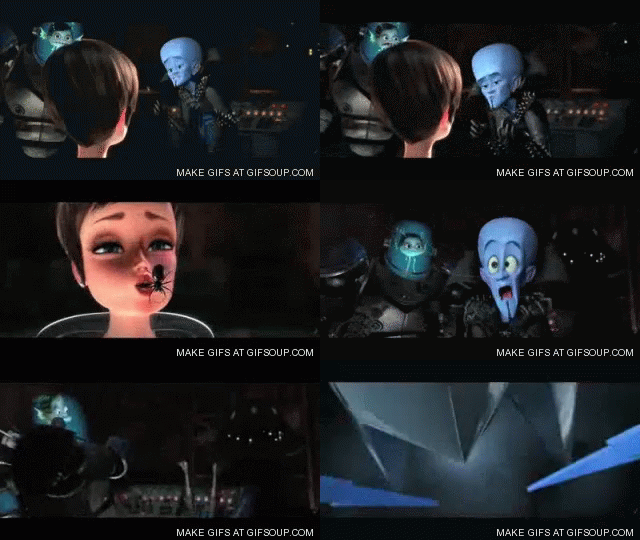
Personally, I feel the story could have ended at the end of chapter four, but she continues on creating new conflicts to give a bigger story to the spiders while still leaving the ending rather open. I would like to think that the spiders win, Matthew is just a positive ninny, and he put the spiders inside his new girl that he is driving off with which is why the dog runs away. Overall, the beginning of the story felt the most compelling to me, while the rest of the book was more or less just an intriguing thriller. The major complaint I have is there was a little drag during the survival scene at the camp, but because Pinborough added the "men inflicting women with spider babies" which, to me, was coming off very strong in her "in between the lines story", I was kept interested in the vulnerability of the women. I think the biggest mystery left open at the end is about the deafness, which I had just assumed was something to do with the spiders not being able to hive-mind with deaf things. So, in the end we're still left wondering what exactly is happening and why, but we're wrapped up enough to feel content with Matthew's personal story.


Image result for megamind spider gif

Thursday, September 5, 2019

The Funeral

In terms of categorizing Richard Matheson's short story "The Funeral," it is more a comedy than a horror. It uses classic and well known monsters to fill its' character line up which, for a short story, is a good way of describing a room full of monsters without having to spend too much time detailing them. However,  the main character Morton Silkline takes the role of the lead character, starting off as what could be seen as an unlikable character. He is a mortician dealing with the dead, something people already struggle to deal with, he is a salesman, and he is good at his job.

The first impression of the character leaves the reader thinking this man, Morton the mortician, makes a living on people dying, and he makes a lot of money if he plays off grief and the monetary appearance of his guests. He sees death as a dollar sign but as he meets his next client and begins to realize something is particularly off about the guy, he shows his struggle to keep his salesman appearance through the outright strangeness that is scaring him.

Overall, the fact that the character does not really change is successful because of the humorous tone of the story. True, somewhere deep inside the man he has changed his view of the supernatural, but all-in-all he still remains the same manipulative salesman with a newly acquired clientele. Instead of feeling angry at Morton for being rewarded for his success as a salesman, the reader finds it laughable because of the predicament he has been put it. Another example of using humor to ease the horror of the situation is "Interview with the Vampire," and how the reporter is killed/turned by Lestat at the very end for having listened to Louis "whine" about his and their existence. Lestat turns the horror of the event into comedy by saying the same line he had said to Louis, as Louis had told the reporter, when he was given the "option" to be turned. Like Morton, the reporter does not really change his ways or grow in the story outside of extending his knowledge of the supernatural and his belief of it, and his predicament at the end is softened with Lestat's way of handling the situation. It leaves the reader with a "happy ending" to what is in actuality a horrific ending. While "The Funeral" does not end as grimly as "Interview with the Vampire," it does allow the reader to sympathize with the mortician and his greed. 

Overall, the humor of the story was constant, which made the entire thing a joke. If Matheson had written the story without the humor, it would be interesting to see how eerie the final version would be, but it would also not satisfy the reader's need to feel for Morton. Therefore, the success of the story relies on it being classified more as comedy than as horror, but without the monsters it would not be a comedy.

Monday, August 26, 2019

Come out, Neville!

Richard Matheson's I Am Legend takes the classic vampire and turns the concept presented by monsters upside down. Although the story moved quite slowly, the reward for getting to the ending makes it all worthwhile. Robert Neville's struggle with being a lonely man in a world of man-eaters is certainly redundant as Matheson shows throughout the book. The time-span occurring within each chapter, page, and paragraph can vary greatly which emphasizes the repetitive and hopeless feeling Neville is experiencing as he tries to find purpose to fulfill his will to live. 

The story itself keeps the eye of the reader focused on Neville to keep the reader from ever even thinking about sympathizing with the vampires. The vampires themselves, being classical vampires following most of the traditional rules, do not need explaining beyond that they're there and the methods work. The focus of the story becomes Neville's desire to cure them and understand them to a scientific level and the intrigue that keeps the reader is his success on finding out why they work the way they do. It is telling of how human's first reaction to anything new is to kill it and study it, which reminds me of books or films about aliens where the human reaction is always aggressive. Neville embodies human aggression, primitive instincts, and his desire to survive which even he cannot understand. 

His desire to possess and control ultimately leads to the accumulation of the dog and the vampire woman, Ruth. It is with these two characters the reader witnesses Neville's division from what or who he once was to the monster we get to see him as at the ending of the story. In retrospect, trying to visualize the story from Ruth's perspective, every action Neville took resembles a genocidal maniac or serial killer who is ruthless (ha, Ruth...Ruthless) and praying on his victims when they are of no competition to him. Although he is not gender biased on who he kills, he definitely seems more interested in the women. In speculation, the reason why the ghoulish vampires that were always dead outside of Neville's door in the morning were most likely offerings, at least it is the only way to justify why they were always women. 

Matheson excellently keeps the reader sympathizing with Neville until his last few moments before execution, where Ruth reminds Neville that he has been as terrifying to them as they are to him. Neville criticizes the gang of vampires killing the ghouls savagely, but as he states they could do it while they are sleeping like he does. It plays with the subject of honor killing, killing to defend oneself, and killing just for the pleasure. 

There are certainly three types of monsters presented in the story. The mindless ghouls at the beginning of the vampire evolution, the vampires who are trying to adapt to the new world from being human, and Neville, the last remaining human. Each one tackles the concept of monster in a different way. Neville is killing people he once knew because they have become rabid. He does not stop to differentiate between the ghouls or the vampires, he just assumes they are all the same. This is reminiscent of killers who take out their anger or frustrations on others who are similar. The ghouls are the literal monsters of the story. They act on pure instinct and it is that instinct that makes them a danger to the other apex predators in the story. The vampires at the end are the most identifiable. They are doing what they must to survive, and the fact that they are a classifiable monster outside of the book is the only thing that makes them monsters in the book. Otherwise, the vampires like Ruth, are the most civilized of all of the characters. 

Sunday, August 25, 2019

A post from a Lurker

As a non-poster in the posting world I humbly greet any and all who read this. Here is a blog for reviewing and discussing books and entertainment related horror. Fight me, or stay quiet and sulk in disagreement. Maybe even agree. Either way, I hope you add a little horror to your day.

Best wishes,
V